

Quick Start Guide to Growing Your Own Food
Everything You Need to Know to Start a Thriving Edible Garden—No Matter Your Space or Experience Level
Growing your own fruits, vegetables, and herbs offers more than just fresh produce—it reconnects you with nature, saves money, reduces food miles, and ensures chemical-free harvests. Whether you’re in a suburban backyard, a city balcony, or a small rural plot, food gardening is possible—and incredibly rewarding.
:max_bytes(150000):strip_icc()/its-seed-catalog-season-explore-but-dont-buy-too-much-4861416_19-b0cab5ac2b044e7e8ec2a539360d5e1c.JPG)
1. Planning Your Edible Garden
Start Small and Scale Up
Avoid burnout by starting with a manageable plot—perhaps a few containers, a single raised bed, or a 4×4 ground plot. Focus on success with 3–5 crops the first season.
Know Your Growing Zone
Use a USDA Hardiness Zone map (or your country’s equivalent) to determine your frost dates and what you can plant when.
- Example: Zone 6 gardeners can sow cool-season crops like lettuce in early spring and warm-season crops like tomatoes after the last frost.
Choose a Sunny Spot
Most food crops require at least 6–8 hours of direct sunlight daily. Leafy greens can tolerate partial shade, but fruiting crops (like tomatoes, peppers, and melons) need full sun.
2. Choosing What to Grow
Easy Crops for Beginners
Start with fast-growing, low-maintenance crops:
| Vegetables | Herbs | Fruits |
|---|---|---|
| Radishes | Basil | Strawberries |
| Lettuce | Parsley | Raspberries |
| Green beans | Mint | Dwarf citrus (pots) |
| Zucchini | Chives | Tomatoes (yes, a fruit!) |
| Carrots | Oregano | Blueberries (in pots or acidic soil) |
Grow What You Eat
There’s no use growing turnips if you never eat them. Think about your grocery list and favorite dishes—grow ingredients you’ll love cooking with.
3. Picking the Right Growing Method
In-Ground Beds
- Pros: Inexpensive, long-term
- Cons: Needs good native soil, weed pressure
Raised Beds
- Pros: Great drainage, better soil control
- Cons: Higher upfront cost
Container Gardening
- Pros: Ideal for small spaces, patios, balconies
- Cons: More frequent watering, smaller yield
Vertical Gardening
- Use trellises, grow bags, and wall-mounted planters to grow up instead of out. Great for cucumbers, beans, peas, herbs, and strawberries.
4. Building and Filling Garden Beds

Raised Bed Filling Tips
Use the Hügelkultur (layered) method to save money and improve soil health:
- Base: Logs, branches
- Mid-layer: Grass clippings, leaves
- Top: 60% topsoil + 30% compost + 10% perlite/sand
See Raised Bed Filling Table →
5. Soil Health: The Foundation of Everything
Healthy Soil = Healthy Plants
Your soil needs:
- Organic matter: Compost is gold
- Good drainage: Avoid waterlogging
- pH balance: Most veggies prefer 6.0–7.0
Amendments to Consider
| Amendment | Purpose |
|---|---|
| Compost | Adds nutrients & microbes |
| Worm castings | Improves soil structure & fertility |
| Lime/Sulfur | Adjusts soil pH |
| Perlite | Improves aeration |
| Aged manure | Natural fertilizer |
6. Planting Tips for Success
Direct Sow vs. Transplants
- Direct Sow: Beans, carrots, radishes
- Transplant: Tomatoes, peppers, lettuce
Spacing and Depth
Follow seed packet directions for planting depth and spacing. Overcrowded plants struggle to grow and are more disease-prone.
Succession Planting
Keep your garden productive year-round by staggering plantings (e.g., sow lettuce every 2–3 weeks).
7. Watering Your Garden the Right Way

How Much to Water
- General rule: 1–2 inches of water per week, including rainfall
- Check soil moisture by sticking your finger in—if it’s dry up to the second knuckle, water.
Best Practices
- Water in the morning to prevent fungal issues.
- Use drip irrigation or soaker hoses to save water and avoid leaf wetting.
8. Feeding Your Plants
Plants need more than just water—they need nutrients.
| Crop Type | Feed Frequency | Recommended Fertilizer |
|---|---|---|
| Leafy greens | Every 2–3 weeks | Fish emulsion, compost tea |
| Fruiting vegetables | Start after flowering | Balanced NPK or tomato feed |
| Root crops | Mid-season once | Low-nitrogen fertilizer |
Avoid overfeeding—this can lead to leggy plants with fewer fruits.
9. Pest and Disease Management
Common Garden Pests
- Aphids
- Cabbage worms
- Slugs
- Squash bugs
Use organic methods:
- Neem oil spray
- Companion planting (e.g., marigolds repel aphids)
- Row covers and physical barriers
Preventing Disease
- Water the soil, not the leaves
- Rotate crops yearly
- Clean up dead or infected plant material
10. Harvesting Tips
When to Harvest
- Don’t wait too long! Many crops taste best when picked young (like baby greens, zucchini, and radishes).
- Tomatoes: Harvest when they turn deep red and give slightly to pressure.
How to Harvest Without Damage
Use scissors or pruning shears for clean cuts. Tugging can damage plants or roots.
11. Storing and Preserving Your Harvest
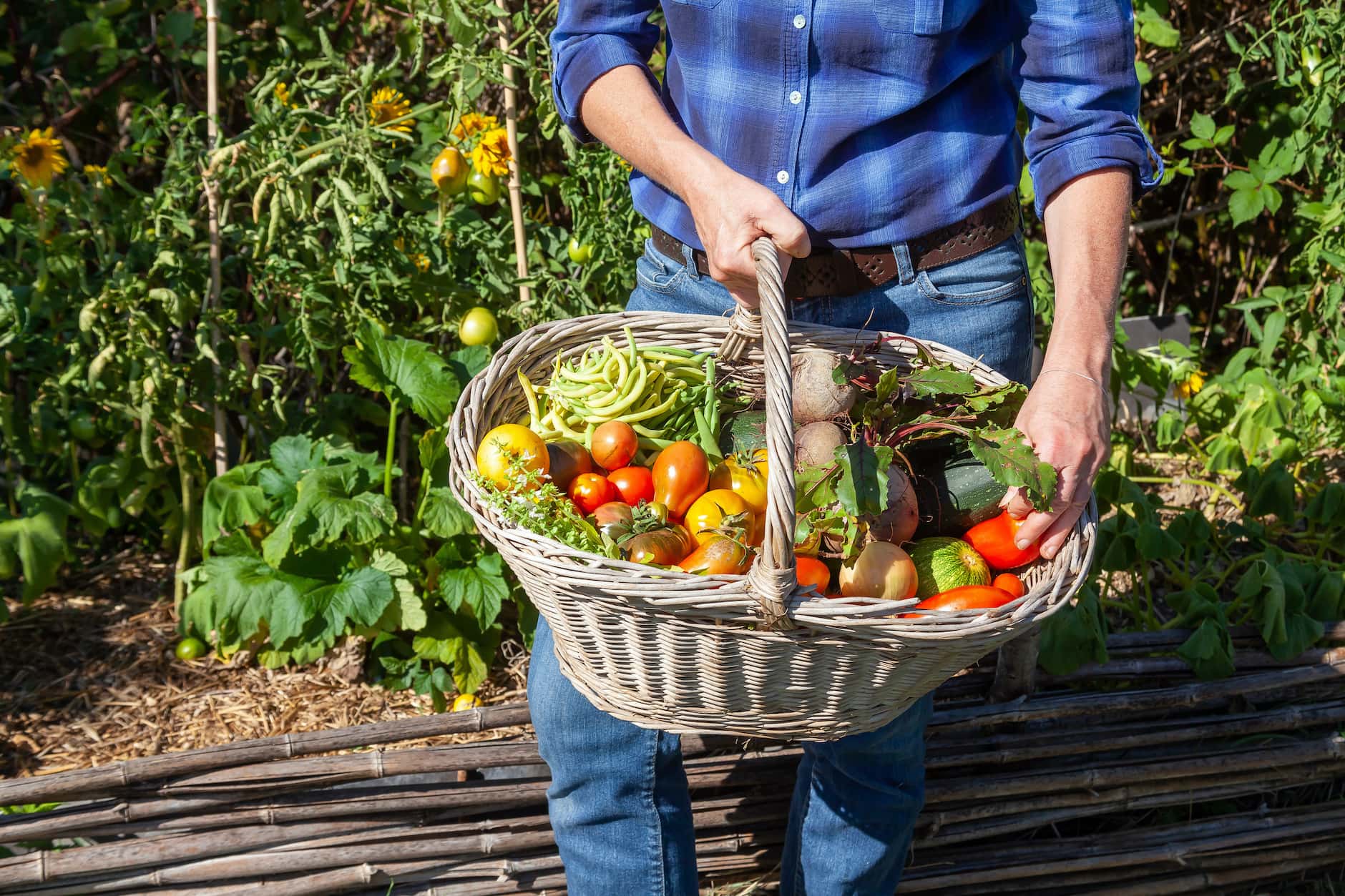
Short-Term Storage
- Leafy greens: Rinse and store in damp paper towels in fridge
- Tomatoes: Store at room temperature
- Carrots & beets: Remove tops and refrigerate
Long-Term Preservation
- Freezing: Blanch green beans, peas, corn
- Drying: Herbs like oregano, mint, thyme
- Canning: Tomatoes, pickles, sauces
- Fermenting: Cabbage into sauerkraut, cucumbers into pickles
12. Seasonal Growing Guide
| Season | Crops to Grow |
|---|---|
| Spring | Lettuce, peas, spinach, carrots, radishes |
| Summer | Tomatoes, peppers, beans, cucumbers, squash |
| Fall | Broccoli, kale, beets, garlic (planted in fall for spring) |
| Winter | Use cold frames or indoor grow lights for herbs, greens |
13. Growing Indoors (Year-Round Harvest)
If you’re tight on space or dealing with a cold climate, indoor food gardening is a fantastic option.
Best Crops for Indoors
- Microgreens
- Leafy lettuce
- Herbs (basil, parsley, cilantro)
- Cherry tomatoes (with grow lights)
Equipment You’ll Need
- Grow lights (LED full spectrum)
- Pots with drainage
- Trays and humidity domes (for seedlings)
Table of Contents
FAQs: Quick Start Food Gardening
Q1: How much time does food gardening take?
Start with 15–30 minutes a day. As your garden grows, expect to invest more time, especially during planting and harvest seasons.
Q2: Is it cheaper to grow food than buy it?
Yes—especially herbs, leafy greens, and tomatoes. Once set up, a small garden can save you hundreds annually.
Q3: What’s the best soil for vegetables?
A mix of loamy soil, compost, and perlite or sand gives great drainage and fertility.
Q4: Do I need fertilizer if I use compost?
Compost provides balanced nutrients, but fruiting crops often benefit from supplemental feeding during bloom and fruit set.
Q5: How do I avoid bugs without chemicals?
Use natural repellents (like neem oil), attract beneficial insects (ladybugs), and plant pest-repelling companions like basil and marigolds.
Q6: Can I garden if I don’t have a yard?
Absolutely. Use containers, window boxes, hanging baskets, or vertical planters on patios and balconies.
Final Thoughts: Your Garden Journey Starts Now
Starting a food garden doesn’t require perfection—just curiosity, a bit of planning, and the willingness to get your hands dirty. The beauty of gardening is that every season teaches you something new. With just a few tools and a little space, you can grow food that nourishes both your body and soul.